Trading Academy
 Forex Glossary
 Trading Guides
 News
News Blog
Blog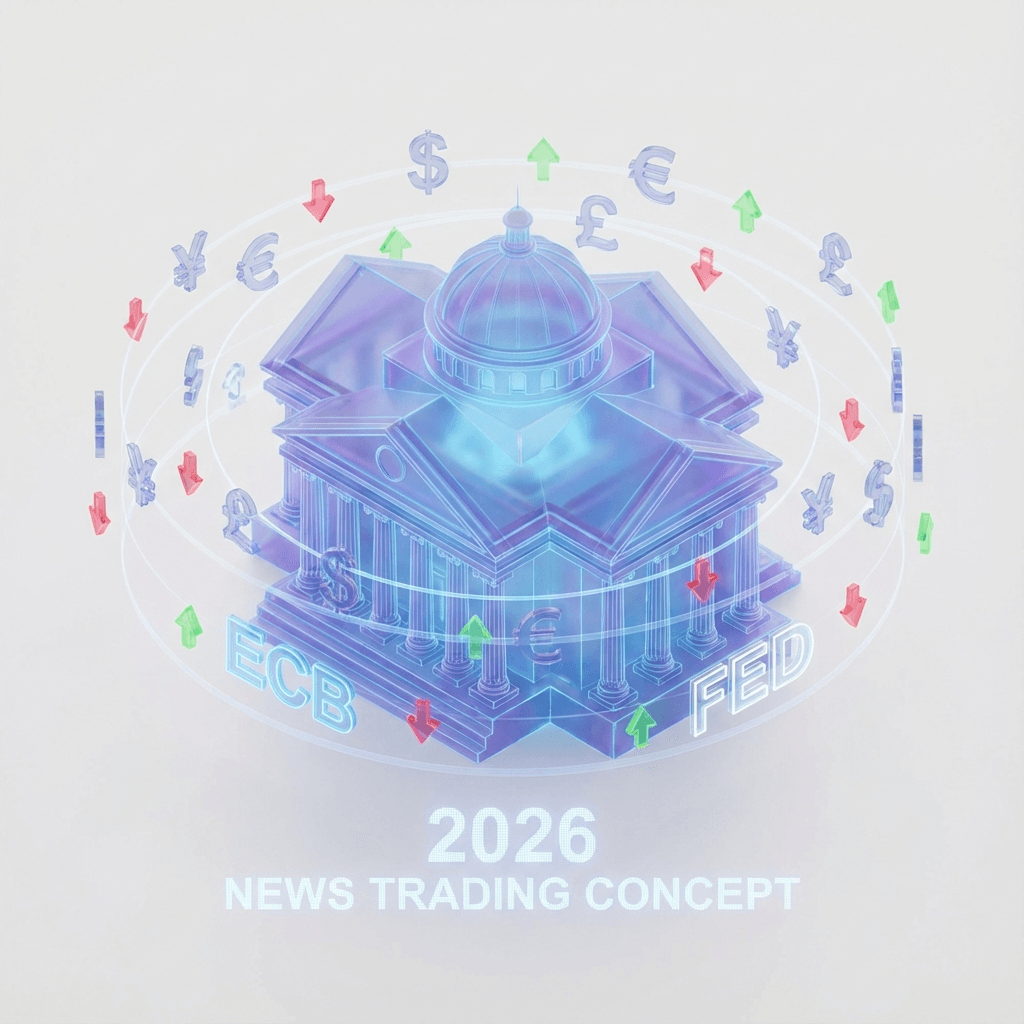




Key Takeaways
- The Apex Predators: Central Banks (Fed, ECB, BoJ) decide the price of money (Interest Rates). They move markets more than any chart pattern.
- Hawkish = Strong USD: When the Fed wants to fight inflation (by raising rates), the Dollar strengthens.
- Dovish = Weak USD: When the Fed wants to stimulate the economy (lowering rates), the Dollar often weakens.
- Volatility Warning: Trading during a rate decision (FOMC, ECB Presser) is like defusing a bomb. Spreads can 10x in seconds.
- Divergence: The best trades happen when one bank is raising rates (Buy) and another is cutting rates (Sell).
Table of Contents
Who Controls the Market?
You can draw all the trendlines you want. If the Federal Reserve Chair (Jerome Powell) says "We are raising rates," your trendline will break.
Central Banks control the supply of money. Less money supply = Higher Value. More money supply = Inflation/Lower Value.
The Dual Mandate: Jobs vs Inflation
Most Central Banks have two goals:
- Price Stability: Keep inflation at ~2%. See Inflation Guide.
- Maximum Employment: Ensure people have jobs.
The Dilemma:
Raising rates lowers inflation (Good) but hurts businesses and causes job losses (Bad). The Central Bank is always balancing on this tightrope.
Hawks, Doves, and Chickens
You'll hear these terms on Bloomberg TV daily.
| Animal | Sentiment | Action | Currency Impact |
|---|---|---|---|
| Hawk | Aggressive | Hike Rates | BULLISH 🚀 |
| Dove | Passive/Soft | Cut Rates / QE | BEARISH 📉 |
The "Big 4" Central Banks
1. Federal Reserve (Fed) - USA
The Boss. Impacts ALL pairs. Key event: FOMC Meeting.
2. European Central Bank (ECB) - Eurozone
Manages the Euro. Often slower than the Fed. Key event: Monetary Policy Statement.
3. Bank of England (BoE) - UK
The "Old Lady" of Threadneedle Street. Volatile GBP reactions.
4. Bank of Japan (BoJ) - Japan
The Outlier. Usually keeps rates super low (Yield Curve Control), making JPY a funding currency for Carry Trades.
Strategy: Trading the "Rate Decision"
Phase 1: The Release (Algorithms)
Milliseconds after the number drops, algos push price 50 pips. Do not chase this.
Phase 2: The Press Conference (Human)
30 mins later, the Chair speaks. "We might pause next time..." → The algos reverse.
Strategy: Wait for the Press Conference closing Q&A. This gives the "True" direction for the rest of the day.
Currency Intervention (The Nuclear Option)
Sometimes a currency gets too weak (like JPY in 2024).
The Ministry of Finance instructs the Central Bank to BUY their own currency using reserves.
Result: USD/JPY drops 300-500 pips in 1 minute. If you are Long, you are wiped out. Always be careful shorting a currency that politicians are complaining about.
Frequently Asked Questions
Can I predict Central Bank moves?
Not exactly, but you can follow "Fed Funds Futures" which give a % probability (e.g., "80% chance of 25bps hike"). Use the Economic Calendar.
What is QE (Quantitative Easing)?
"Printing Money." The Central Bank buys bonds to inject cash into the system. This devalues the currency (Bearish) but boosts stocks (Bullish).
Why did the market go UP when they hiked rates?
"Priced In." If everyone expected a 0.50% hike and they only did 0.25%, it's seen as "Dovish" relative to expectations. Expectations matter more than reality.
How often do they meet?
Usually 8 times a year (every ~6 weeks).
What is the 'Dot Plot'?
A chart released quarterly by the Fed showing where each member thinks interest rates will be in the next few years. It's the best clue for long-term trends.
For deeper comparison, review our best forex brokers, check individual broker reviews, use the Match Me to a Broker quiz, and calculate risk with the position size calculator.