Find a Regulated Forex Broker in Under 60 Seconds
Compare spreads, execution speed, fees, and regulation — thoroughly tested and updated for 2026.

What Are You Trading?
Select an asset class to instantly match with top-rated, regulated brokers.
Compare Top Brokers for 2026
Verified by our experts. We analyze spreads, execution speeds, and regulatory standing to bring you the safest and fastest platforms.

Exness

Libertex EU

XM

AvaTrade

BlackBull Markets

FXTM

RoboForex

IQ Option

HFM

Axi
Trusted by Retail Traders Worldwide
"BrokerAnalysis is the only platform I check before opening a new trading account. Transparent data and zero fluff."
Worried About Scams?
The forex industry is plagued with unregulated, offshore bucket shops. We built this platform to protect retail traders from losing their deposit to bad actors.
We Verify Regulation
Every broker must hold Tier-1 or Tier-2 regulatory licenses.
We Track Complaints
Constant monitoring of withdrawal issues and user reports.
Transparent Fees
We uncover hidden commissions and deposit fees.
Monthly Updates
Our rankings reflect live market conditions, updated every 30 days.
Why We're Different
We don't just list brokers; we ruthlessly test them. Our data-driven methodology ensures zero bias.
Independent Ranking
Our scores are generated mathematically via our proprietary algorithm, completely insulated from commercial relationships.
No Pay-To-Rank
Brokers absolutely cannot pay to alter their rating or position on our Top List. Positioning is 100% earned by merit.
500+ Data Points
We analyze execution speeds, slippage rates, exact spread averages, platform downtime, and regulatory fines.
Transparent Scoring
Every single component of a broker's score is broken down publicly. You can see exactly why a broker scored a 4.1 vs a 4.8.
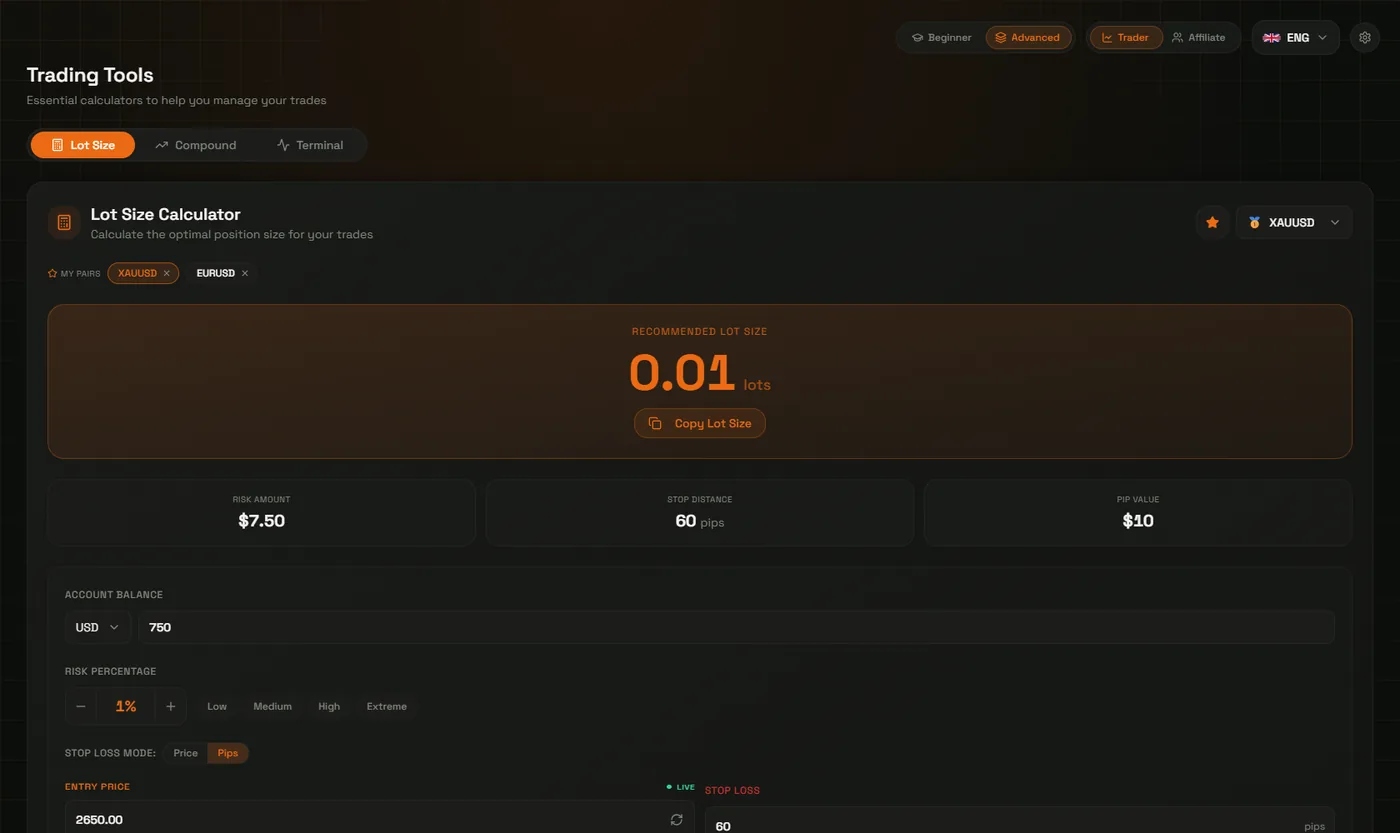
Free Trading Tools
Built to protect your capital and optimize your broker selection
What Is the Best Forex Broker in 2026?
Based on our independent testing of over 100 regulated platforms, the best forex broker depends heavily on your specific trading strategy, experience level, and geographic location. However, top-tier brokers consistently share high regulatory standards, tight spreads, and low-latency execution networks.
Core Factors When Choosing a Broker
- 1. Tier-1 Regulation is Non-NegotiableYour capital is only safe if it is held in segregated accounts overseen by tier-1 authorities like the FCA (UK), ASIC (Australia), or CySEC (Europe). Never deposit funds with an unregulated offshore entity.
- 2. Trading Costs & Spread StructuresFor day traders and scalpers, a raw spread account (ECN pricing) with a fixed commission often yields lower total costs than a standard "zero commission" account where the broker widens the spread to compensate.
- 3. Platform Technology & ExecutionMetaTrader 4 (MT4), MetaTrader 5 (MT5), and cTrader remain the industry standards. More important than the platform itself is the broker's underlying server infrastructure—look for execution speeds under 50ms to minimize slippage during volatile news events.
Understanding Asset Classes
Modern CFD brokers offer much more than just the major currency pairs (EUR/USD, GBP/USD). Traders now have direct market access to global indices (S&P 500, NASDAQ), hard commodities like Gold (XAU/USD), and cryptocurrencies. Ensure your chosen platform provides competitive leverage and margin requirements for your preferred instruments.
Our Verdict
There is no single "perfect" broker for everyone. A scalper needs raw spreads and VPS integration, while a beginner needs a copy-trading platform and an intuitive mobile app. Use our comparison tool to filter based on exactly what you need.
In-Depth Broker Analysis
Our research team continuously monitors over 100 parameters per broker. Below is a detailed breakdown of our top-rated platforms, including their distinct advantages, ideal user profiles, and potential drawbacks.

Exness Review Summary
Exness consistently ranks as our top choice due to its unparalleled liquidity, executing 99.8% of trades in under 50ms. Their Pro account structure offers institutional-grade spreads starting at 0.0 pips on EUR/USD, combined with minimal commissions. Regulated across multiple Tier-1 jurisdictions including the FCA and CySEC, they provide an incredibly robust trading environment for both manual and algorithmic traders. The availability of unlimited VPS hosting for active traders makes it a powerhouse for Expert Advisors (EAs).
Pros
- Near-zero spreads on Majors
- Unrestricted scalping & hedging
- Daily free withdrawals
Cons
- High minimum for VIP accounts
- No US clients accepted

Libertex EU Review Summary
As a pioneer in the retail forex space, Libertex EU has built a massive global footprint by catering heavily to beginner and intermediate traders. They excel with a highly intuitive proprietary trading app and an exhaustive educational library that breaks down complex technical analysis into digestible concepts. While their standard account spreads are slightly wider than ECN competitors, they do not charge any commission, making cost calculation extremely straightforward for new entrants to the market.
Pros
- Outstanding proprietary mobile app
- Zero commissions on Standard accounts
- Extensive beginner academy
Cons
- Wider spreads than ECN competitors
- Inactivity fees apply after 6 months
XM Review Summary
Earning its spot in our top tier, XM provides a highly balanced trading ecosystem. Their tight spreads and diverse asset list, which includes hundreds of single-stock CFDs alongside traditional Forex pairs, make them an excellent choice for multi-asset traders. Their integration with third-party analytical tools like TradingCentral and Autochartist provides substantial value, equipping traders with high-probability technical setups directly inside the MT4/MT5 platforms.
Pros
- Excellent multi-asset selection
- Free TradingCentral integration
- Local funding methods
Cons
- Customer support can be slow on weekends
- Limited educational videos
AvaTrade Review Summary
Earning its spot in our top tier, AvaTrade provides a highly balanced trading ecosystem. Their tight spreads and diverse asset list, which includes hundreds of single-stock CFDs alongside traditional Forex pairs, make them an excellent choice for multi-asset traders. Their integration with third-party analytical tools like TradingCentral and Autochartist provides substantial value, equipping traders with high-probability technical setups directly inside the MT4/MT5 platforms.
Pros
- Excellent multi-asset selection
- Free TradingCentral integration
- Local funding methods
Cons
- Customer support can be slow on weekends
- Limited educational videos

BlackBull Markets Review Summary
Earning its spot in our top tier, BlackBull Markets provides a highly balanced trading ecosystem. Their tight spreads and diverse asset list, which includes hundreds of single-stock CFDs alongside traditional Forex pairs, make them an excellent choice for multi-asset traders. Their integration with third-party analytical tools like TradingCentral and Autochartist provides substantial value, equipping traders with high-probability technical setups directly inside the MT4/MT5 platforms.
Pros
- Excellent multi-asset selection
- Free TradingCentral integration
- Local funding methods
Cons
- Customer support can be slow on weekends
- Limited educational videos
How We Rank & Review Forex Brokers
Our scoring algorithm aggregates over 500 distinct data points across 9 core categories. We believe in providing transparent, objective data to combat the massive amount of misinformation in the retail trading space.
Read Full Methodology1. Trust & Regulation
Weight: 25% of Total Score. We track licenses across 40+ global jurisdictions.
2. Fees & Commissions
Weight: 20% of Total Score. Live tracking of average spreads under volatile & standard conditions.
3. Platform Quality
Weight: 15% of Total Score. Testing MT4/MT5 integrations, proprietary apps, and execution speed.
4. Asset Offering
Weight: 10% of Total Score. Evaluating the breadth of Forex pairs, Crypto, Stocks, and Commodities.
Explore Broker Categories
Find specialized brokers tailored exactly to your region and trading needs.
Forex Broker FAQs
Expert answers to the most common questions about selecting, evaluating, and trading with retail forex brokers.

Still Have Questions?
Check out our extensive trading academy for deep-dives into market mechanics.
Visit AcademyThe 'best' broker depends entirely on your strategy. Exness is our top pick for high-volume traders due to unlimited leverage options and near-zero spreads. However, XM is widely considered the best for beginners due to their extensive educational resources, zero-fee deposits, and comprehensive cent account options. A scalper needs tight ECN spreads, while a swing trader prioritizing safety might prefer heavily regulated giants like IG.
Yes. Our ratings are mathematically derived using a proprietary algorithm scoring over 500 distinct data points across 9 categories (Regulation, Fees, Platforms, Assets, etc.). Brokers cannot pay to improve their rank or alter their score. While we do receive affiliate compensation if you open an account through our links, this does not affect where or how a broker appears in our objective data tables.
Technically, you can start with as little as $1 to $10 using Micro or Cent accounts offered by brokers like RoboForex, Exness, or XM. However, to practice proper risk management without risking more than 1-2% of your account per trade, a minimum deposit of $100 to $500 is recommended for beginners.
Tier-1 regulators are strict, government-backed financial authorities in developed economies. Examples include the FCA (UK), ASIC (Australia), and the SEC/CFTC (USA). Brokers holding these licenses must comply with rigorous capitalization requirements, keep client funds in segregated tier-1 bank accounts, and undergo regular third-party audits.
An A-Book broker (often ECN/STP) routes your trades directly to the interbank market or liquidity providers; they make money simply through the spread mark-up or a flat commission. A B-Book broker (Market Maker) takes the other side of your trade, meaning if you lose, the broker profits. Many modern brokers operate a hybrid model, routing profitable traders to A-book and keeping beginners on B-book.
A swap fee, or rollover, is the interest rate differential between the two currencies in the pair you are trading. If you hold a forex position open overnight, you will either pay or earn this interest. E.g., if you buy a currency with a higher interest rate than the one you are selling, you may earn a positive swap. For Islamic traders, 'Swap-Free' accounts are available that waive these overnight fees to comply with Sharia law.
Negative Balance Protection (NBP) is a safety mechanism ensuring your trading account balance can never fall below zero. In fast-moving markets (like a central bank rate hike), extreme slippage can cause losses to exceed your initial margin. With NBP, the broker absorbs the loss, meaning you can never owe the broker more money than you deposited. This is legally mandated in the EU/UK, but optional for offshore entities.
Brokers advertising 'zero commissions' primarily make their money through the Spread. They take the raw interbank spread (e.g., 0.1 pips on EUR/USD) and mark it up (e.g., to 1.0 pips). You pay this mathematical difference every time you open a trade. Therefore, 'commission-free' does not mean it is free to trade; the cost is simply baked into the bid/ask price.